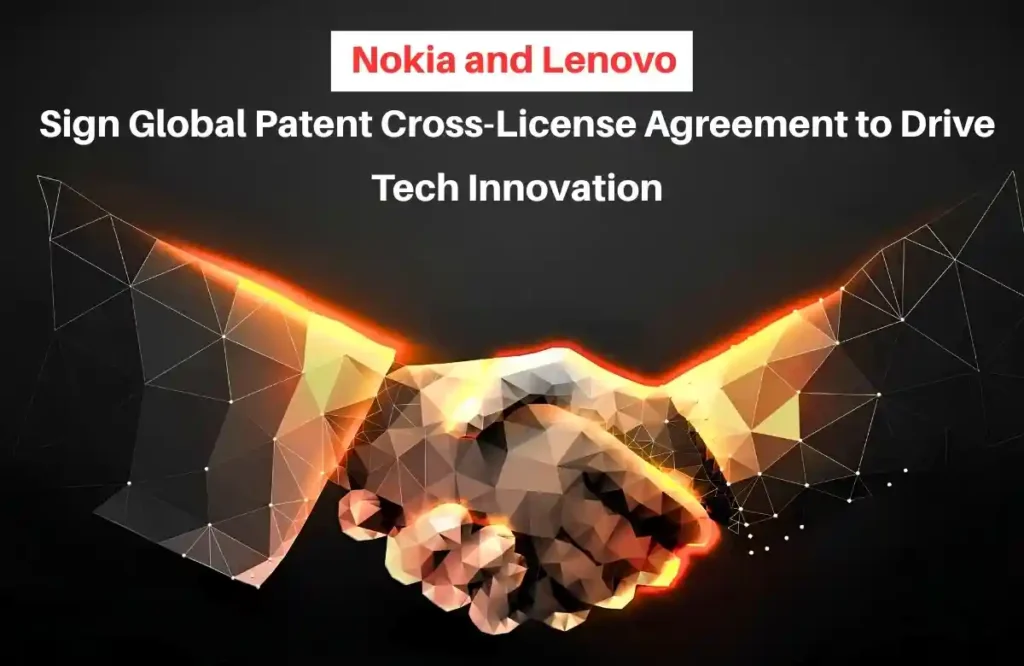
The global technology market depends heavily on the continuous sharing of proprietary intellectual property. In a significant corporate development, Nokia and Lenovo have officially executed a new multi-year, multi-technology global agreement. This arrangement builds directly upon the previous operational foundation established by the parties during their prior legal settlement. Why does this matter? The formalization of the Nokia Lenovo cross-license agreement represents a mutual commitment to resolving intellectual property access without resorting to prolonged litigation. Through the execution of this Nokia Lenovo patent agreement, both corporations secure authorized access to critical technology portfolios that power modern consumer electronics and infrastructure solutions. It’s a pragmatic approach. This system of structured Patent Licencing serves as a vital framework for the tech sector, ensuring that foundational research can be utilized legally by global manufacturers to create advanced consumer products.
Understanding the Scope of the New Nokia Lenovo Cross-License Agreement
The scope of this newly signed arrangement covers a broad range of technologies and spans multiple years. This ensures long-term operational predictability for both companies. Under the provisions of this global contract, both entities grant each other mutual rights to utilize their respective patented inventions. While the specific financial terms, balancing payments, and commercial details remain strictly confidential under mutual non-disclosure terms, the legal impact is clear. It establishes a steady cross-licensing framework that covers various generations of cellular standards and digital solutions.
This agreement is a direct continuation of the corporate relationship that began when the companies settled their global patent disputes. By avoiding the adversarial nature of court proceedings, the corporations can focus their resources on engineering and commercial deployment. But what does this mean for hardware? The specific scope allows Lenovo to integrate standardized technologies into its extensive product line, which includes personal computers, smartphones, tablets, and enterprise servers. Meanwhile, Nokia continues to generate steady returns from its massive historical investments in research and development.
Read Also: Can You License a Software Patent in India? Everything You Need to Know
Key operational aspects of this mutual cross-license framework include the following points:
- The contract provides legal immunity against patent infringement claims for both parties across the designated product categories.
- The multi-year duration offers long-term stability for product roadmaps without the risk of sudden injunctions.
- The coverage extends to multiple technologies, ensuring that both existing and emerging digital standards are addressed.
The Core Legal Framework Underlying the Nokia Lenovo Patent Agreement
To understand the structural significance of this arrangement, you must examine the legal framework that governs standard-essential patents. Standard-essential patents are inventions that must be implemented to comply with specific technical standards, such as 5G cellular connectivity or advanced video compression. The industry rules dictate that these specific patents must be licensed under transparent and uniform guidelines to maintain open market competition. And the legal framework supporting the Nokia Lenovo patent agreement is built entirely on these regulatory principles. It ensures that both patent holders and product manufacturers operate on an equitable playing field.
By entering into this voluntary contract, both corporations demonstrate adherence to global intellectual property compliance standards. When companies contribute their proprietary research to open international standards, they do so with the legal expectation of receiving fair compensation from users. This agreement illustrates how major technology companies resolve potential friction points through bilateral negotiation. Instead of asking courts to determine the exact technical value of individual patent claims, the corporations reached a clear compromise that respects the legal rights of both inventors and implementers.
The contractual framework relies on several core corporate tenets:
- Recognition of the vast intellectual property portfolios held by both participating technology corporations.
- Protection of proprietary research assets while simultaneously enabling their controlled commercial utilization.
- Commitment to bilateral dispute resolution as the preferred alternative to international jurisdictional litigation.
Read Also: Can You License a Software Patent in India? Everything You Need to Know
Strategic Impacts of Fair and Non-Discriminatory Patent Licencing Protocols
The broader technology ecosystem relies on a specific legal doctrine known as fair, reasonable, and non-discriminatory terms. These terms ensure that no single company can unfairly block another from using a standard technology. Because of this, inventors receive a fair return on their research expenditures. The strategic impacts of these structured Patent Licensing protocols extend far beyond the immediate signatories, as they validate the efficiency of the open-standard model. When market leaders engage in stable licensing practices, it creates a predictable economic environment that drives faster consumer adoption of new technologies.
For an average consumer, these complex legal agreements mean that different devices can communicate seamlessly across global networks regardless of the manufacturer. Lenovo can continue to deploy its hybrid artificial intelligence strategies and hardware portfolios efficiently. Concurrently, Nokia can sustain its extensive research programs, which are backed by billions of euros of investment over the last two decades. By maintaining this continuous cycle of investment, licensing, and product deployment, the technology sector avoids fragmentation and continues to advance systematically.
The long-term industry benefits of these fair protocols include the following structural impacts:
- Reduction of systemic market risk by establishing clear channels for legal intellectual property acquisition.
- Acceleration of product development timelines because manufacturers do not need to reinvent existing standard solutions.
- Financial sustainability for foundational research organizations that continuously feed new inventions into open global standards.
Read Also: Patent Monetize Helps Turn a Locally Filed Patent Into a Globally Licensed Revenue Asset
Recent Post
-
 Hassle-Free Closures: How Patent Monetize Manages Everything from Listing to Legal Closure
 -
 Types of Patent Licensing: Exclusive, Non-Exclusive, and Sole Licenses Explained
 -
 How Patent Monetize Helps International Tech Owners Capture Massive Consumer Bases
 -
 Fighting SEP Abuse: Why Lenovo Partnered with Save Our Standards Coalition in 2026
 -
 Asus and Nokia End Video Coding Litigation with Global Patent Licensing Deal