Every year, independent inventors and early-stage startups expend immense capital and intellectual energy filing patent applications. They secure their grant letters. But then, they hit a legal and commercial wall.
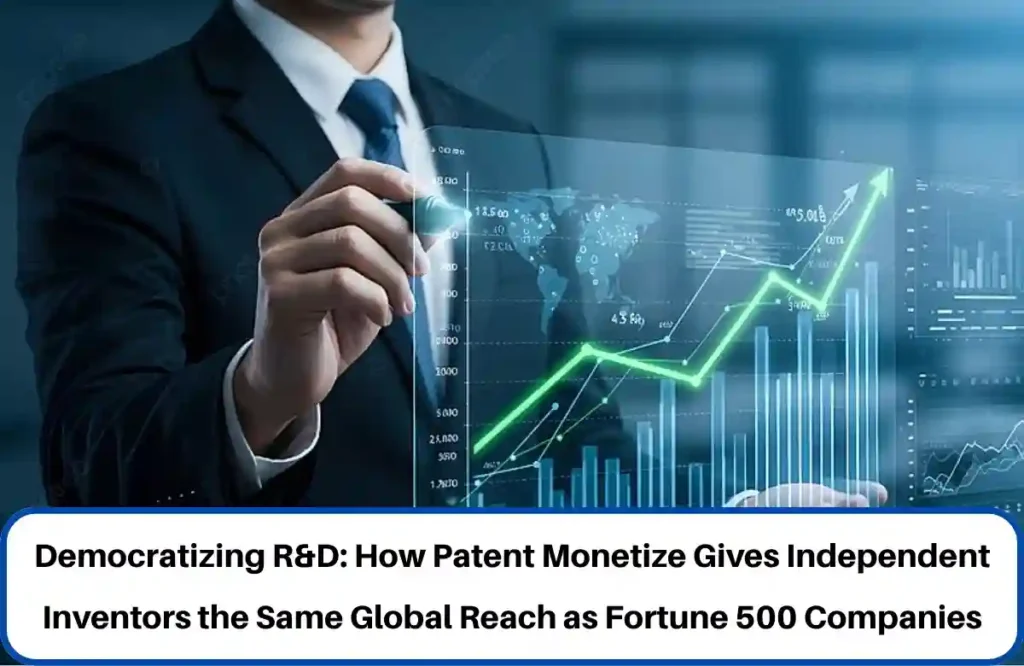
For decades, the intellectual property (IP) market has favored multinational conglomerates. A Fortune 500 entity retains an army of in-house counsel, corporate brokers, and extensive capital to license or assign its patent portfolios. Conversely, an individual patentee holds a valid statutory right but lacks direct access to international assignees or licensees in global tech hubs. Because of this market asymmetry, highly viable patented technologies remain dormant in registry databases.
The core issue isn’t the quality of innovation. It’s a lack of transactional infrastructure. That’s where Patent Monetize alters the dynamic, operating as a global digital marketplace and legal consulting platform designed to equalize market access.
Shifting from Dormant IP to a Liquid Global Asset Class
Historically, liquidating or licensing a patent meant retaining boutique IP brokerages demanding exorbitant upfront fees. These costs effectively bar small entities from the market. If we want an equitable R&D ecosystem, the transaction process must be digitized and accessible.
Read More: Roche Signs Licensing Deal with Medicines Patent Pool to Improve Influenza Drug Availability
Why should corporate size dictate market leverage?
By serving as a neutral intermediary, a digital marketplace brings transparency to an industry long defined by opaque, private dealings. By aggregating international buyers, corporate licensees, and institutional investors on a single platform, the structural advantage of massive corporate legal teams is neutralized.
Independent rights-holders can list their assets, positioning their proprietary technology directly before corporate buyers seeking external R&D. Whether you want to fully assign your patent rights through an outright sale or retain title while generating recurring revenue through a licensing agreement, the platform manages the logistics. It handles everything from initial valuation to targeted counterparty matching.
Read More: How the US Patent Licensing Market Became a Billion-Dollar Industry
A self-directed IP sale usually fails. Why? Because a simple web listing cannot satisfy a corporate board’s due diligence requirements. Corporate assignees don’t purchase unverified patents. They acquire assets backed by clear evidence-of-use (EoU) documentation, market data, and solid legal frameworks. Large enterprises have specialized departments to compile this evidence. Individual creators don’t.
To execute a cross-border transaction with a large enterprise, a platform must provide rigorous technical and legal consulting alongside its marketplace functions. By delivering essential transactional support, such as technical claim charts, market analyses, and structured non-disclosure and transfer agreements, Patent Monetize ensures that independent creators present their assets with corporate-grade authority. And because the platform manages cross-border negotiations and legal closures, it converts a complex, high-risk process into a secure transaction for both parties.
Commercializing Technology in High-Growth Jurisdictions
Patent Commercialization isn’t limited to established Western economies. Emerging markets like India are experiencing rapid industrial expansion in AgriTech, green energy, and BioPharma. Yet, foreign inventors rarely possess the local networks or legal counsel needed to secure joint ventures or distribution channels in these jurisdictions.
An effective monetization strategy resolves this by acting as a direct channel to high-growth markets. Through dedicated holding structures and localization protocols, platforms can match foreign patent owners with regional manufacturers and licensees. This shifts the asset’s utility from passive legal protection to active, revenue-generating commercialization.
When you give independent inventors the infrastructure to sell and patent license their statutory rights globally, the innovation landscape changes. Intellectual property ceases to be a playground for the highest bidder. Instead, it becomes a merit-based market where legal protection yields real financial returns.
Read More: The Next Move After Patent Monetization: A Strategic Guide to Product Patent Selection
Recent Post
-
 Hassle-Free Closures: How Patent Monetize Manages Everything from Listing to Legal Closure
 -
 Types of Patent Licensing: Exclusive, Non-Exclusive, and Sole Licenses Explained
 -
 How Patent Monetize Helps International Tech Owners Capture Massive Consumer Bases
 -
 Fighting SEP Abuse: Why Lenovo Partnered with Save Our Standards Coalition in 2026
 -
 Asus and Nokia End Video Coding Litigation with Global Patent Licensing Deal