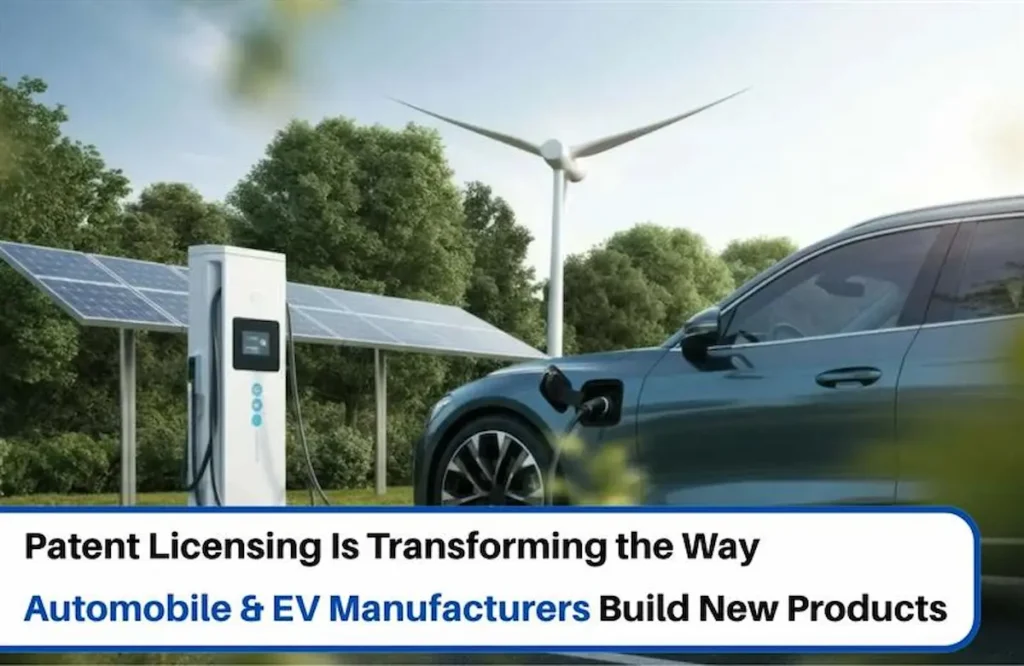
The global car market is facing a massive change. As we move away from gas engines, intellectual property has become the core of every business strategy. Today, Patent Licensing in EV Industry frameworks are the main tools used to design and build new vehicles. Why waste time trying to reinvent the wheel? Licensing offers a structured, legal way to swap technical breakthroughs. It’s about working smarter.
The Strategic Role of Patent Licensing in EV Industry Growth
Switching to electric power isn’t easy. It requires deep expertise in battery chemistry and thermal management. Most traditional car brands simply didn’t own these specific patents when the shift started. Because of this, Patent Licensing in EV Industry agreements are now the standard way for legacy brands to get their hands on modern tech. By paying royalties or signing cross-licensing deals, manufacturers can use high-end parts without spending years on basic research.
This legal exchange of rights keeps the industry moving as a single unit rather than a group of scattered rivals. It’s a strategy that picks cooperation over isolation. Because the entry cost for EV tech is so high, licensing acts as a necessary bridge. It lets a company that builds great luxury interiors pair up with a firm that knows lithium-ion density. Without these legal rules, innovation would just stop. No single player can master every branch of engineering at once.
Read Also: Turning Academic Inventions into Industry Solutions: Patent Monetization for Research Universities
How Licensing Agreements Help Automobile Manufacturers Reduce Development Costs
Building a new car from scratch costs billions. It’s a huge gamble. However, through smart Patent Licensing in EV Industry choices, companies can cut those financial risks significantly. When a brand licenses a proven motor design, they avoid the steep price of experimental failure. You don’t pay for the mistakes if you license the solution that already works.
This professional approach to sharing intellectual property lets companies put their money into branding and user experience instead of hidden hardware. Licensing is essentially a legal shortcut to tech that has been tested and protected. If a startup perfects a solid-state battery, it’s often cheaper for a giant manufacturer to buy a license than to build a billion-dollar lab and hope for the best. It’s just simple math.
Improving Time to Market Through Standardized Patent Licensing Frameworks
In the EV world, speed is everything. Using Patent Licensing in EV Industry standards lets builders skip the slow process of Patent filing and defending new patents for every tiny part. When a company uses licensed tech, they’re using a “known quantity” that already meets global safety rules.
But why does this matter for the bottom line? It shortens production cycles. It gets cars into showrooms faster. For you, this means more variety and better tech on the road every year. Instead of waiting seven years for a redesign, manufacturers can update their cars in three or four years by plugging in licensed modules. This speed is the only way to stay current with fast-moving software and electronics.
Strengthening Legal Compliance and Intellectual Property Rights in Manufacturing
Building cars without a clear license is a recipe for a lawsuit. Nobody wants production to stop because of a legal fight. That’s why Patent Licensing in EV Industry protocols provide a “safe harbor” for manufacturers. These contracts define exactly how a technology is used, where it’s sold, and what the fee is. By sticking to these strict legal structures, companies stay safe from Patent infringement claims.
A solid strategy ensures that inventors get paid while manufacturers get the legal “green light” to grow. It isn’t just about the tech; it’s about having the right to sell a product in fifty countries without a hitch. This legal clarity is the backbone of the whole system. It gives investors the confidence to fund new factories because they know the “right to produce” is locked down in a contract that won’t break.
Future Trends Regarding Patent Licensing in the Electric Vehicle Sector
What’s coming next? As cars become computers on wheels, the need for shared intellectual property will only grow. Patent Licensing in the EV Industry will soon cover things like AI and how cars talk to the power grid. We expect to see more “patent pools,” where groups of companies share ideas to set one high standard for everyone.
This protected environment ensures the next generation of cars will be safer and more connected. If every car uses the same licensed language, they can talk to each other to stop accidents before they happen. Licensing isn’t just a line item in a budget anymore. It’s the foundation of engineering. We’re moving toward a world where the best car isn’t the one with the most secrets, but the one that uses the best shared ideas most effectively.
Recent Post
-
 188 Patents, One Licensing Strategy: How Patent Portfolios Are Being Built for Commercialization?
 -
 AWS’s $1 Billion + IP Licensing Deal: Why Companies License Technology Instead of Building Everything In-House
 -
 Huawei Signs Multi-Year Patent License Deal with Qualcomm Covering AI & 5G, Expected to Push Licensing Value Past $6.9 Billion
 -
 Hassle-Free Closures: How Patent Monetize Manages Everything from Listing to Legal Closure
 -
 Types of Patent Licensing: Exclusive, Non-Exclusive, and Sole Licenses Explained