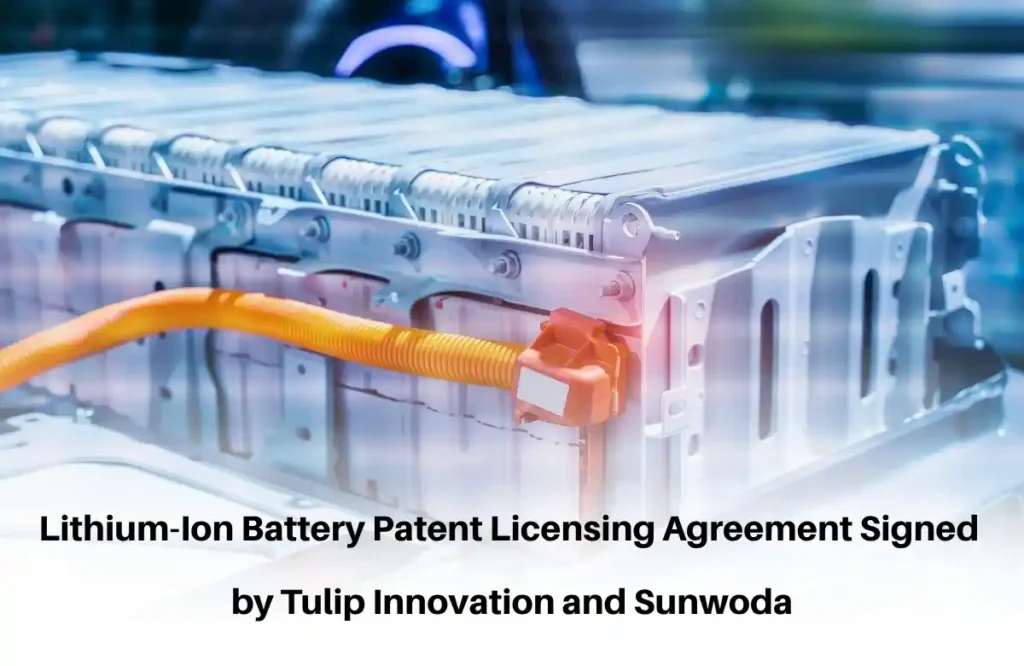
The global energy transition depends on secure access to intellectual property rights. Without these legal protections, advanced clean technologies cannot scale. In a significant move for the energy sector, a formal Lithium-Ion Battery Patent Licensing Agreement has been executed between Tulip Innovation and Sunwoda. This legally binding commercial transaction establishes a strict legal framework for the shared use of proprietary engineering designs and manufacturing processes. By executing this Lithium-Ion Battery Patent Licensing Agreement, Tulip Innovation grants explicit legal permissions to Sunwoda to utilize specific patented technological assets under mutually agreed financial and operational terms. The signing of this Lithium-Ion Battery Patent Licensing Agreement highlights a clear reality. Contractual intellectual property frameworks are now mandatory for scaling up commercial production in the global renewable energy market.
Legal and Commercial Terms of the Lithium-Ion Battery Patent Licensing Agreement
What exactly is a patent licensing agreement? It’s a formal contract where the owner of an intellectual property asset grants permission to another party to manufacture, use, or sell a patented invention. In this transaction, the legal obligations protect the innovator’s rights while enabling commercial expansion.
The main legal and structural elements established under this contract include:
- Grant of Rights: The contract defines the scope of the intellectual property being transferred. It gives the licensee the legal right to integrate the patented battery designs into its commercial production lines.
- Territorial Scope: The agreement specifies the exact geographic regions where the licensed technology can be manufactured and distributed. This ensures strict compliance with local patent laws.
- Financial Structure: The financial terms outline the exact payment structure. This typically includes upfront licensing fees and recurring royalty payments calculated from production volumes.
- Quality Control and Compliance: The terms require the licensee to maintain specific technical standards. Why? It’s necessary to preserve the value and reputation of the licensed patent portfolio.
Through these terms, the agreement provides a stable legal framework. It protects research investments while allowing market demand to be met efficiently.
The Strategic Position of Tulip Innovation and Sunwoda in the Battery Market
The collaboration between these two entities brings together distinct strengths. We see a clear division between technological innovation and large-scale manufacturing capability. Each party plays a specific, legally defined role to ensure the intellectual property is effectively utilized in final products.
- Tulip Innovation as the Licensor: This entity functions as the technology developer. It focuses on research and development to create advanced engineering solutions for energy storage. By licensing its portfolio, the company monetizes its research. This secures necessary revenue to fund future technological development.
- Sunwoda as the Licensee: As a major manufacturer of energy storage products, this company requires reliable access to advanced technical designs. It’s a matter of maintaining its competitive position. Securing this license allows the company to legally upgrade its manufacturing processes and expand its product offerings.
But this contract isn’t just about two companies. It demonstrates how technology developers and manufacturing companies must work together through legal frameworks to bring new energy solutions to the commercial market.
Global Impact of Intellectual Property Rights on Energy Storage Technology
Intellectual property rights are essential for organizing the global supply chain. Clear licensing frameworks allow advanced engineering concepts to be transferred securely across different companies and regions.
The legal protection of technology impacts the wider market in several ways:
- Securing Research Investments: High-quality patent protection ensures that companies can invest in multi-year research projects. It gives them confidence that their final inventions cannot be copied without authorization.
- Standardizing Manufacturing Processes: Licensing agreements often require strict adherence to specific technical specifications. This helps standardize safety and performance metrics across the battery industry.
- Reducing Commercial Litigation Risks: By securing formal licenses, manufacturing companies eliminate the risk of patent infringement lawsuits. This ensures long-term operational stability for their production facilities.
And as global demand for energy storage continues to rise, formal patent agreements will remain a primary tool. They balance market competition with the protection of original technological innovation.
Read Also: How the US Patent Licensing Market Became a Billion-Dollar Industry
Recent Post
-
 Hassle-Free Closures: How Patent Monetize Manages Everything from Listing to Legal Closure
 -
 Types of Patent Licensing: Exclusive, Non-Exclusive, and Sole Licenses Explained
 -
 How Patent Monetize Helps International Tech Owners Capture Massive Consumer Bases
 -
 Fighting SEP Abuse: Why Lenovo Partnered with Save Our Standards Coalition in 2026
 -
 Asus and Nokia End Video Coding Litigation with Global Patent Licensing Deal