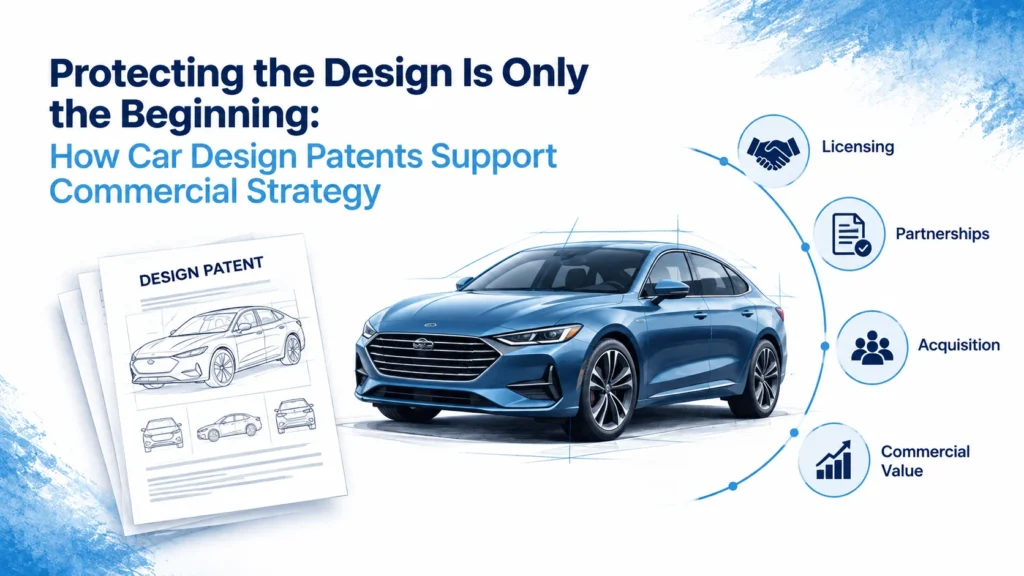
A distinctive vehicle design takes years of styling, engineering and market research to build. It shapes how buyers recognize a brand and often defines a model’s place in the market. Car design patents protect eligible design features, such as a grille, lamp signature or wheel pattern, from being copied.
But a granted design patent does not create commercial value by itself. Companies still need to decide how the design fits their product strategy, partnerships and wider IP portfolio.
This article explains why design protection is the start of a commercialization plan and how licensing, supplier arrangements and portfolio management follow from it.
What Falls Within the Scope of a Car Design Patent?
A car design patent protects how a product looks, not how it works. In an automotive context, that can include body styling, distinctive exterior features, interior elements and lighting configurations, where they qualify. The exact scope depends on the jurisdiction and on the drawings in the registered design, so the filing needs careful planning.
Design protection also sits alongside other rights. Utility patents cover how a product works, while trademarks cover the marks that identify the brand. A single vehicle often needs all three. Each right covers a different part of the product and together they give a company a stronger ground when it negotiates licenses or faces copying.
The Business Value of Design Protection in the Automotive Sector
Vehicle design takes years of research, styling, prototyping and testing. It is costly to rebuild if a competitor copies it. Design IP protection gives a company a legal basis to act against unauthorized use of its key features, though it works best as one part of a wider risk-management plan. It also supports differentiation.
An EV maker with a distinctive exterior look builds recognition over time and IP protection helps defend that identity when similar models appear. Design rights do not stand alone, either. They sit alongside technical patents, trademarks and trade secrets, each covering a different part of the product. Reviewing them together, not in isolation leaves fewer gaps and gives the company a stronger position in licensing and partnership talks.
Why Obtaining Design Protection Does Not Automatically Create Commercial Value?
Protecting a design and making money from it are two separate decisions. IP protection means securing enforceable rights over an eligible design. Commercialization means working out how those rights support a business goal such as licensing, partnerships or market entry.
A design that matters a great deal in one market may mean little in another depending on the vehicle segment, demand, manufacturing feasibility and competitors. Owning a design right is not proof of commercial value.
Before pursuing opportunities, owners should review the portfolio and identify which designs connect most closely to products people actually want. Grouping related design rights with technical patents can then make the whole package easier to position and commercialize.
How Car Design Patents Can Support Commercial Strategy?
Once the design rights have been secured, the next question is how those rights can support the company’s commercial objectives. The options can include internal use, licensing, assignment and strategic partnerships.
1.) Supporting the Company’s Own Product Strategy
A protected design can do more than block copying. It can shape how a company builds and positions its own vehicles. Design filings work best when they are timed with product launches, so key features are covered before the public sees them.
They also help separate one model from another within the same range. When the company enters a new market, existing rights can guide where to file next. Over time, this feeds into wider portfolio planning.
2.) Exploring Design Licensing Opportunities
A design owner does not have to use every protected design alone. It can license the rights to another company on negotiated terms. That partner might be another automotive manufacturer, a component maker, a mobility company or an aftermarket business with a relevant product.
The agreement sets out how the design may be used, including scope, territory, duration, exclusivity and royalties. Stating each point clearly gives both sides a shared understanding of what is permitted and reduces the chance of disputes later.
3.) Considering Patent or IP Assignment
Rather than license a design an owner may choose to sell it outright. In an assignment, ownership passes to the buyer under the agreed terms and applicable law. A license grants only defined rights and the licensor remains the owner. The best route depends on the owner’s goals.
A company that wants ongoing royalties and control may prefer licensing while one that wants a clean exit or fresh capital may choose assignment.
4.) Supporting Strategic Partnerships
Design rights often come up in wider talks with manufacturing, technology or product partners. A company building a vehicle with a partner may need to show who controls the look of the product and a protected design gives that discussion a firm footing.
In many cases, the design is one part of a larger package that also includes technical patents and know-how. Presenting these assets together can make the offer clearer and more attractive to the partner.
What Should Automotive Companies Assess Before Commercializing a Design?
Before approaching a licensee or buyer, a company should know exactly what it owns. Start with the registration, drawings, jurisdictions and legal status to confirm which visual features are protected, since IP protection rarely extends to the whole vehicle. Next, check ownership rights. Confirm who holds the rights whether any assignments were recorded and that renewals are up to date. Unclear title can stall a deal quickly.
Then look at the commercial side: where the design is used, which products could carry it and whether real demand exists. Market and technology analysis should support that view.
Finally, review the wider landscape. A patent landscape analysis maps competing technologies and related IP, whereas a freedom-to-operate analysis checks the infringement risk of a specific product or activity. They answer different questions, so one cannot replace the other.
How Design Patents Can Fit Into a Broader Automotive IP Portfolio?
Once these different rights are identified, companies can assess how they work together and which assets have the strongest commercial relevance. Looking at these rights together often shows stronger commercialization options than looking at each one alone. A buyer or licensee may find a combined package far more useful than a lone design right. Still, not every asset in a portfolio carries the same weight.
The results of that review can help owners decide which assets to retain, develop, license, assign or include in a broader commercial offering. That review then guides the next step: license an asset, assign it, keep it for internal use or develop it further. A clear view of the portfolio makes each of those choices easier to defend.
Real-World Commercialization Scenario: From Vehicle Design to Licensing Opportunity
Consider an automotive company that develops a distinctive design for a new EV platform and secures design IP protection for the eligible visual features. Its product plan is set but the team sees the design could suit other applications.
Before approaching anyone, it reviews the design scope, ownership rights, geographic coverage, and market relevance and checks for competing IP. It then lists companies that may have a real commercial reason to want the rights such as component makers or mobility firms.
The company then compares the available commercial structures against its objectives, the scope of its rights, and the potential counterparties it has identified. The right route depends on the rights it holds and what it wants to achieve. No outcome is guaranteed but a structured review makes the decision far easier to defend.
How Patent Monetize Can Support Automotive IP Commercialization?
Patent Monetize is a marketplace where patent owners can present their IP and technology opportunities to potential commercial counterparties. For automotive companies, that can include design-related assets as well as broader technology portfolios. Owners can use the platform to explore licensing opportunities, patent acquisitions, technology transactions and wider commercial discussions.
Listing an asset does not guarantee a buyer or licensee, but it puts the opportunity in front of companies that are actively looking. For owners evaluating commercialization, this creates a way to present relevant IP to potential counterparties and explore whether further discussions are appropriate. Patent Monetize helps owners move from the first to the second by making discovery and evaluation easier.
Key Factors That Influence the Commercial Potential of a Car Design Patent
Commercial potential depends on more than the existence of a design registration. The following factors can help owners and potential counterparties assess whether the asset has a practical commercial fit.
- A narrowly drawn design may be easy to work around, which limits what a licensee or buyer will pay for it.
- Clear title and a valid, maintained registration give a counterparty confidence to move forward.
- Rights tied to products that buyers want and that fit a partner’s existing range are easier to place.
- IP protection counts most in the markets where the design is sold or made, so gaps in coverage can reduce its appeal.
- Similar designs already on the market can weaken the position and change how much the rights are worth.
- A design that can move into production soon and that suits identifiable licensees or buyers has a shorter path to a deal.
- A design backed by related technical patents or trademarks is usually worth more than one offered alone.
The Bottom Line
For automotive companies, the commercial assessment should begin once the scope and status of the design rights are understood. Before deciding on a route, owners should look closely at the design’s scope, ownership rights, market relevance, competitive environment and links to other IP.
Depending on their goals, the right path might be internal commercialization, licensing, assignment or a strategic partnership. IP protection is the starting point and the choices that follow are what turn a registered design into a business asset.
If you own automotive design rights or related patent assets and are evaluating licensing, acquisition, or other commercialization opportunities, explore Patent Monetize to present your IP to potential commercial counterparties.
Recent Post
-
 The $600 Million Netlist–Micron Patent Deal: How AI Memory Patents Can Generate Licensing Revenue
-
 Protecting the Design Is Only the Beginning: How Car Design Patents Support Commercial Strategy
-
 Build or License? The IP Strategy Automotive Companies Should Consider Before Investing in New Technology
-
 Can Listing a Product Online Amount to Patent Infringement? Delhi High Court’s Ruxolitinib Decision Explained
-
 Europe Moves to Strengthen IP Valuation: Why Patent Valuation Is Becoming a Strategic Priority