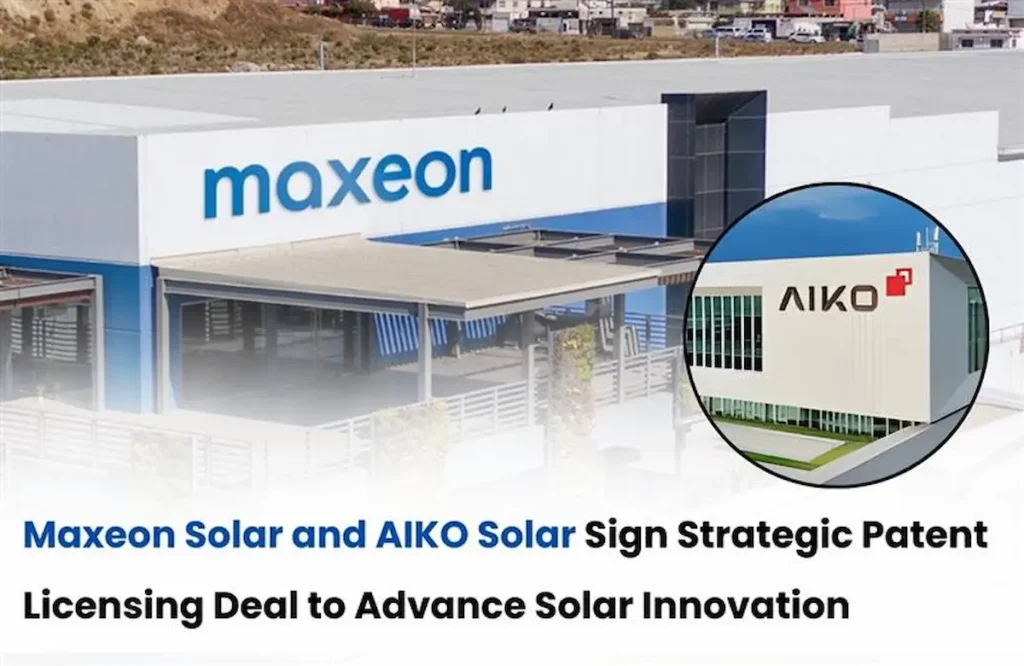
The solar energy industry has recently witnessed a significant milestone in intellectual property management. Maxeon Solar Technologies, a global leader in solar innovation, and AIKO, a premier manufacturer of high-efficiency solar cells and modules, have officially announced a comprehensive Patent licensing agreement. This collaboration marks a pivotal shift in how industry leaders approach technology sharing and market expansion through structured legal frameworks.
Understanding the Maxeon and AIKO Patent Licensing Agreement
The Maxeon and AIKO Patent Licensing agreement is designed to resolve existing intellectual property disputes and create a roadmap for future technological cooperation. By entering into this arrangement, both companies have demonstrated a commitment to moving beyond litigation and focusing on the delivery of advanced solar solutions to a global audience.
This agreement primarily centers on the high-efficiency Back Contact (BC) cell technology. Both Maxeon and AIKO have invested heavily in the research and development of these technologies, which offer superior energy conversion rates compared to traditional solar cells. Through this deal, the companies have established a mutual understanding that respects the R&D investments made by each party while ensuring that the market remains competitive and innovative.
Read More: How Patent Monetize Connects Sellers and Pre-Vetted Corporate Buyers
Strategic Importance of the Maxeon Solar Patent Licensing Deal
The Maxeon and AIKO Patent Licensing Agreement serves as a vital instrument for market stability. In the rapidly evolving renewable energy sector, companies often face legal hurdles regarding the use of proprietary technologies. By formalizing this license, Maxeon ensures that its extensive portfolio of patents is respected and utilized under agreed-upon terms.
This settlement is not merely a conclusion to past disagreements but a strategic move to secure the company’s position as an innovation powerhouse. It allows Maxeon to monetize its intellectual assets while maintaining its competitive edge in the high-end solar market. The deal underscores the importance of robust Patent Protection in the solar industry, where the design and efficiency of a cell can define a company’s success for decades.
AIKO Solar Patent Agreement and Technological Synergy
For AIKO, the AIKO Solar patent agreement represents an opportunity to solidify its global presence. As a company that has rapidly ascended the ranks of solar cell manufacturing, having a clear legal path to use specific high-efficiency technologies is crucial. This agreement provides AIKO with the necessary legal certainty to scale its operations and export its products to regions where Maxeon holds significant patent rights.
The collaboration highlights a shift toward a more mature industry where Patent Licensing is used as a tool for growth rather than a barrier to entry. By securing rights to use specific Maxeon patents, AIKO can continue to innovate its own product lines while adhering to international intellectual property standards.
Read Also: Why Patent Owners Struggle to Find the Right Buyers in Today’s Market
The Role of Patent Valuation and IP Strategy
A critical component of any large-scale legal settlement in the tech sector is the process of Patent Valuation. Determining the financial and strategic worth of solar patents requires a deep understanding of market trends, efficiency gains, and future scalability. In the context of this agreement, the valuation of the respective portfolios ensured that the licensing terms were fair and beneficial for both stakeholders.
Effective Patent Valuation allows companies to treat their inventions as tangible assets that can be leveraged for partnerships, financing, and cross-licensing deals. In this case, it provided the foundation for a balanced agreement that acknowledges the contributions of both Maxeon and AIKO to the field of photovoltaics.
Strengthening Global Standards Through Patent Protection
The solar industry relies on constant innovation to drive down costs and improve energy output. However, without strong Patent Protection, companies would have little incentive to invest billions in R&D. The agreement between Maxeon and AIKO reinforces the principle that intellectual property rights must be upheld to ensure long-term industry health.
By choosing Patent Licensing over prolonged courtroom battles, these two giants have set a positive example for the rest of the renewable energy sector. It shows that even the most competitive rivals can find common ground through legal frameworks that prioritize the advancement of clean energy technology over individual disputes.
Conclusion
The announcement of the Maxeon and AIKO patent licensing agreement is a clear signal that the solar industry is entering a new era of professional and legal maturity. This deal provides a stable environment for both companies to continue their work in developing high-efficiency solar modules.
Through clear communication, respected legal boundaries, and a shared vision for a sustainable future, Maxeon and AIKO have turned a potential conflict into a constructive partnership. This move not only benefits the companies involved but also provides consumers and installers with greater confidence in the availability and legal standing of next-generation solar technologies. As the industry continues to grow, such agreements will likely become the blueprint for how global technology leaders manage their intellectual property for the greater good of the energy transition.
Read More: Patent Monetize Helps Turn a Locally Filed Patent Into a Globally Licensed Revenue Asset
Recent Post
-
 188 Patents, One Licensing Strategy: How Patent Portfolios Are Being Built for Commercialization?
 -
 AWS’s $1 Billion + IP Licensing Deal: Why Companies License Technology Instead of Building Everything In-House
 -
 Huawei Signs Multi-Year Patent License Deal with Qualcomm Covering AI & 5G, Expected to Push Licensing Value Past $6.9 Billion
 -
 Hassle-Free Closures: How Patent Monetize Manages Everything from Listing to Legal Closure
 -
 Types of Patent Licensing: Exclusive, Non-Exclusive, and Sole Licenses Explained