Patent scope
Technical subject matter, disputed terminology, and interpretations affecting the dispute.
A detailed technical foundation for complex patent disputes.
Patent Monetize supports corporate IP teams, patent owners, and law firms with technical investigation, patent analysis, evidence development, and organised reporting throughout a patent dispute.
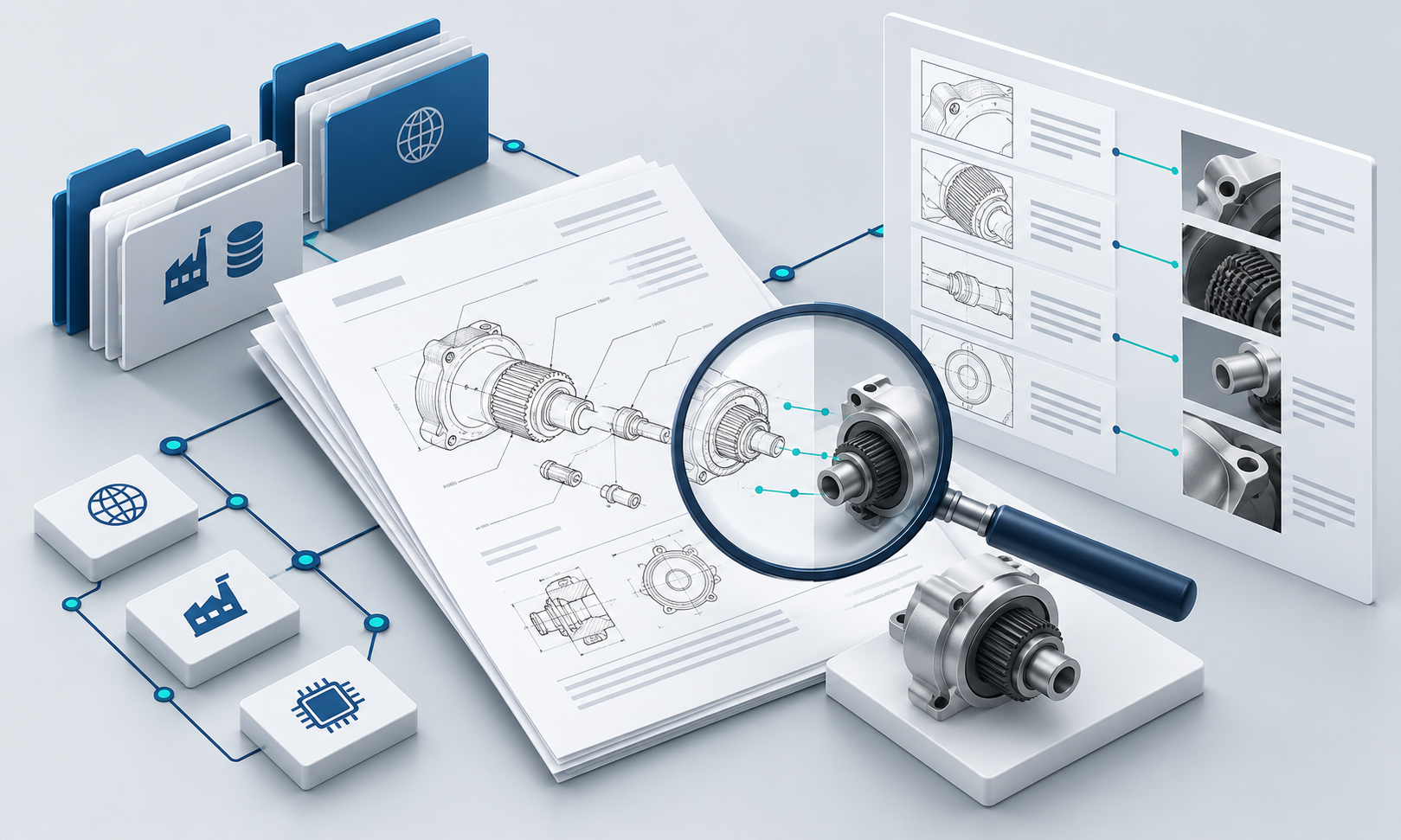
Our solution connects the patent record, the technology under examination, and the evidence needed to evaluate disputed issues. We help your team understand what a claim requires, how a product or process operates, what the available evidence establishes, and where further investigation is necessary.
Assignments can cover a focused technical question or an integrated programme involving multiple patents, products, parties, and jurisdictions. The scope is structured around the stage of the matter, counsel’s instructions, and the decisions your team needs to make.
Technical subject matter, disputed terminology, and interpretations affecting the dispute.
Operation of identified products and the location of claimed features.
Earlier disclosures and technical issues requiring examination.
Supported propositions, inference, and unresolved questions.
Products, activities, versions, and periods connected to the technology.
Accurate explanations for counsel, experts, decision-makers, and the court.
Patent Monetize provides the technical work needed to investigate these questions. Litigation counsel directs the legal position, procedural strategy, filings, and representation.
Technical research, investigation, evidence organisation, and analytical support for case preparation.
Dispute assessment, technical coordination, portfolio exposure analysis, and continuing evidence review.
Patent–product investigation and evidence development for licensing and enforcement assessment.
Review of asserted mappings, product differences, and evidence relevant to defence positions.
Technical due diligence on selected claims, implementations, strengths, and investigation needs.
Explore the technical activities below. The assignment is defined around your selected issues, relevant forum, available evidence, and counsel’s instructions.
We begin by reviewing the patents, proposed targets, available evidence, and intended objectives. The assessment helps your team decide what deserves immediate attention and what requires further work before a position is advanced.
We examine claim language, specification passages, drawings, amendments, examiner communications, applicant responses, and related records. Each patent and claim is assessed using its own record.
We help counsel investigate the technical meaning of disputed terminology and the consequences of competing interpretations. Where the court has adopted a construction, subsequent analysis is aligned with it. Legal positions remain counsel’s responsibility.
We compare selected limitations with identified products, systems, or processes. For each limitation, we explain the proposed correspondence, cite evidence, and record unresolved questions.
We examine whether an asserted mapping accurately describes the product. A gap in public evidence is distinguished from evidence that a feature is absent.
We prepare or review charts linking claim language to product-specific evidence. Charts can be updated as discovery progresses, testing is completed, or counsel provides revised instructions.
We investigate earlier technical disclosures, including patents, scientific publications, standards, manuals, catalogues, conference materials, and archived documentation.
We examine the relationship between claim requirements and the patent’s disclosure. Technical observations are distinguished from legal conclusions under the applicable jurisdiction.
Where documentation cannot resolve a material question, we develop an investigation plan around the required evidence. Methods, findings, and analytical limitations are documented.
Where authorised access is available, we examine software materials relevant to selected functions or limitations. Handling and reporting follow counsel’s instructions and applicable protective-order requirements.
We examine claims, specification provisions, and identified implementations. Claim-to-standard mapping is distinguished from evidence that a product implements the provision.
We identify information needed to resolve specific gaps. Counsel determines formal requests, proportionality, scope, and procedure.
We examine design specifications, schematics, architecture diagrams, development histories, testing records, change logs, manufacturing documents, and technical correspondence.
We investigate relationships between products, components, manufacturers, suppliers, integrators, distributors, and participating entities. Legal attribution, liability, and jurisdiction remain for counsel.
We help an appointed expert navigate the patent record, investigation results, and evidence. The expert independently develops and adopts their opinions. Appointment, qualifications, conflicts, disclosure, and testimony are separately defined.
We assess opposing charts, reports, test methods, and explanations, including material that supports the opposing position.
We prepare issue-focused materials for counsel’s use with witnesses and experts. Counsel directs and conducts the examination.
We investigate technical facts relevant to commercial assessment. Economic modelling and legal damages positions are separately scoped.
For rapid assessment, we prioritise technical questions material to the immediate decision. Completed work is distinguished from investigation requiring additional time, samples, or access.
We prepare technical summaries explaining evidence, disputed limitations, and implementation differences. Counsel and commercial teams direct negotiations and settlement terms.
We turn the technical record into accurate, accessible explanations. Each visual is linked to evidence; conceptual illustrations are clearly identified.
Following a ruling or other development, we reassess the analysis against the issues decided. Technical review of modifications is distinct from a legal freedom-to-operate or compliance conclusion.
Confirm patents, claims, products, jurisdictions, procedural stage, technical questions, and deliverables.
Identify documented, inferred, disputed, and unresolved propositions in the existing record.
Prioritise activities by relevance, feasibility, dependencies, and the decisions they inform.
Conduct research, mapping, testing, document review, and scoped specialist investigation.
Check coverage, consistency, source accuracy, alternatives, and alignment of evidence with conclusions.
Provide charts, reports, exhibits, and issue matrices; update them as the matter develops.
For larger assignments, a common issue register helps maintain consistency across workstreams while preserving differences between patents, products, and jurisdictions.
| Deliverable | What it contains | Intended use |
|---|---|---|
| Early technical case assessment | Selected issues, initial evidence, principal uncertainties, and investigation priorities. | Inform the next stage of the matter. |
| Patent-record analysis | Relevant disclosures, prosecution events, amendments, and family differences. | Support counsel’s review of scope and patent history. |
| Claim-interpretation matrix | Disputed terms, sources, alternative interpretations, and mapping consequences. | Organise technical input for claim construction. |
| Infringement or defence report | Product-specific findings, limitation analysis, evidence, and technical weaknesses. | Assess the proposed patent position. |
| Patent claim charts | Claim-to-implementation mapping with precise citations and evidence status. | Support licensing and counsel-led litigation preparation. |
| Prior-art and validity-support report | References, date evidence, claim comparisons, and technical observations. | Support counsel’s validity assessment. |
| Testing and reverse engineering report | Methods, sample details, observations, results, and limitations. | Establish implementation facts. |
| Technical discovery matrix | Missing evidence, information sources, and issue-linked questions. | Focus counsel’s information-gathering plan. |
| Produced-document analysis | Issue-based findings with document identifiers and supporting excerpts. | Connect disclosed records to the technical position. |
| Expert-support evidence package | Source materials, exhibits, calculations, and research references. | Support the expert’s independent review. |
| Opposing-position response analysis | Review of competing charts, reports, methods, and conclusions. | Identify supported responses and further work. |
| Hearing and trial materials | Evidence-linked diagrams, comparisons, and explanatory sequences. | Communicate complex technology accurately. |
| Executive matter update | Changes in the record, outstanding issues, and recommended investigation. | Keep management and legal teams informed. |
Separate established facts from inference and proposed interpretation.
Identify documents, product versions, and material assumptions.
Provide methods, conditions, results, and analytical limitations.
Handle confidential materials according to agreed access and reporting arrangements.
Privilege, disclosure, protective-order, and retention requirements are determined by counsel.
Record new evidence, changed interpretations, and updated conclusions.
The purpose of the work is to help your team act on the technical record. We identify the next evidence needed, explain unresolved limitations, update analysis following discovery, and prepare clearer material for legal or commercial discussions.
Where evidence weakens the proposed position, we explain the issue directly. Where further work could materially strengthen the analysis, we specify the investigation rather than offering a general recommendation.
Patent Monetize brings the connected workstreams of patent assessment, infringement investigation, patent claim charts, product testing, and commercial analysis into a coordinated assignment.
For complex matters, the investigation can progress from an initial question to detailed evidence and then to a clear next-step assessment. Our approach is built around complete limitation analysis, traceable sources, product-specific findings, transparent uncertainty, and reporting that counsel and technical reviewers can interrogate.
The objective is a technical position that can be examined and understood at every level—from the executive summary to the underlying source.
Whether you are investigating potential infringement, responding to an allegation, reviewing validity, or preparing for a hearing, Patent Monetize can define a technical-support programme around your requirements.
Request a Patent Litigation & Technical Support Assessment ↗Share the patents, selected claims, target products, current stage, available evidence, and key deadlines. We will identify the workstreams, investigation dependencies, and deliverables required.