OUR SOLUTIONS / TECHNICAL EVIDENCE & PRODUCT INVESTIGATION

Patent Infringement Analysis
& Infringer Analysis

Identify Relevant Products. Examine Every Claim Limitation. Build a Traceable Evidence Record.

Connect portfolio screening, product investigation and claim-level evidence to support licensing and counsel-led enforcement assessment.

For corporate IP teams, licensing organizations and law firms.
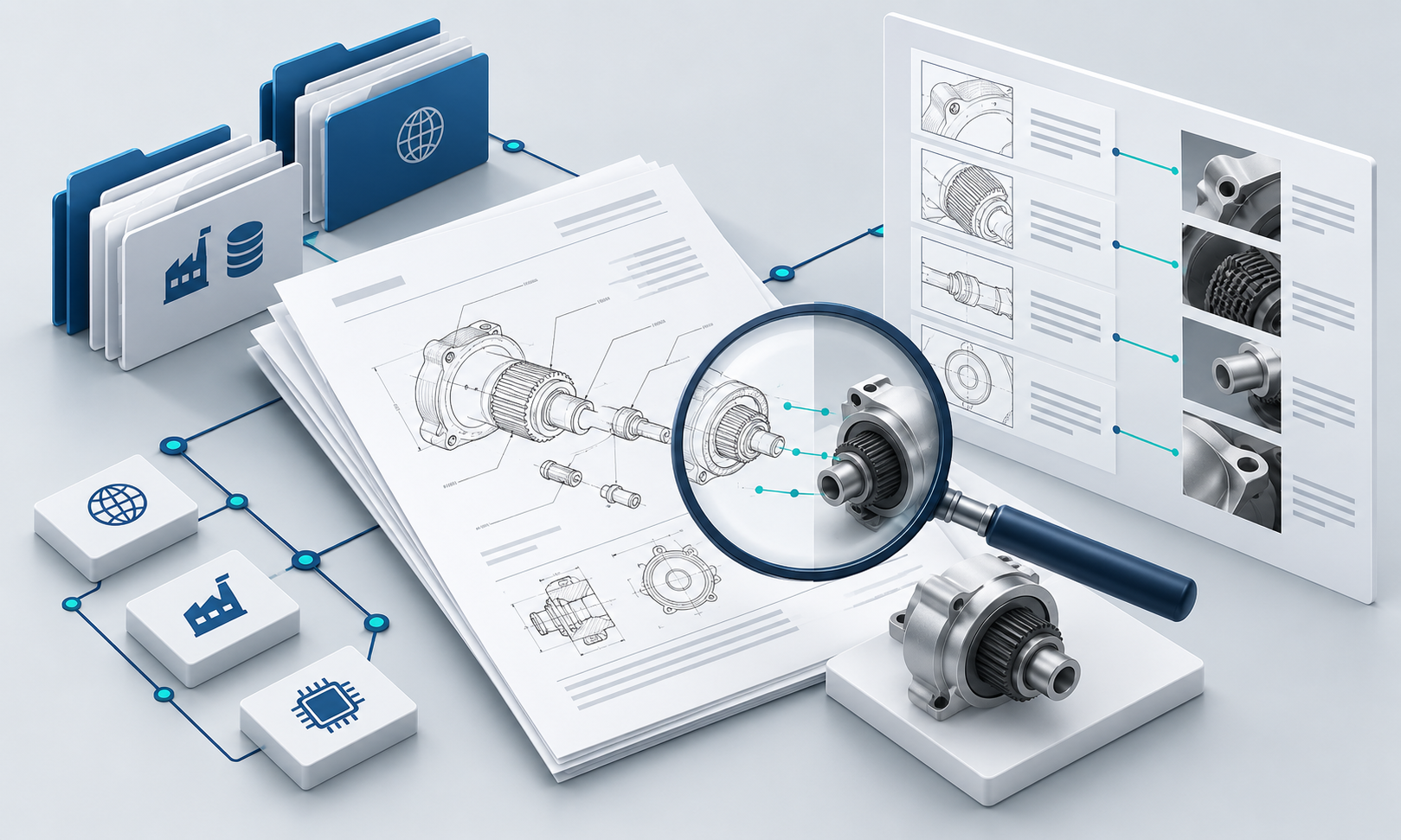
AI illustration comparing patent drawings with product features and supporting evidence
CLAIMS / PRODUCTS / TRACEABLE EVIDENCETechnical detail. A clear basis for review.
UNDERSTAND THE SOLUTION

What This Solution Is About

Identifying a product that resembles a patented invention is only the starting point. A meaningful infringement assessment requires examination of the relevant claims, the product’s implementation, the available evidence and the jurisdiction in which the rights may be asserted.

Patent Monetize provides technical infringement analysis and potential infringer identification for corporate IP teams, patent owners, licensing organizations and law firms. Our work connects portfolio screening, product investigation and claim-level analysis to support licensing, enforcement assessment and litigation preparation.

Assignments can cover a selected patent and product, competing product families, or a structured review of a larger portfolio across technologies and markets.

Patent Infringement Analysis

Patent infringement analysis examines whether a specified product, process, system or implementation contains the features required by a patent claim. The analysis maps individual claim limitations against technical evidence and identifies supported mappings, unresolved questions and apparent differences.

The assessment is specific to the claims, product versions, relevant activities and territories under review. Technical similarity alone does not establish infringement.

Potential Infringer Identification

Potential infringer analysis identifies companies and commercial implementations that warrant further claim-level investigation. It examines relevant products, technology suppliers and market participants, then prioritizes candidates according to technical relevance, available evidence and geographical activity.

Companies identified through screening are treated as investigation candidates. Their inclusion in a target list does not, by itself, establish infringement.

WHO WE SUPPORT

Who Can Use This Solution?

Corporate IP & Licensing Teams

Identify potential use of portfolio technologies, prioritize licensing opportunities and prepare technical evidence for commercial discussions.

Law Firms & Litigation Teams

Obtain structured technical analysis, source-linked claim mappings and evidence-gap assessments to support counsel’s case evaluation and preparation.

Patent Owners & Technology Companies

Understand whether relevant products warrant closer investigation and what supporting information is needed before approaching a company.

Universities & Research Institutions

Investigate commercial applications of patented research and identify opportunities for licensing or industry engagement.

Investors & Patent Acquisition Teams

Assess product-use evidence associated with proposed patent acquisitions and understand its strengths, limitations and further investigation requirements.

DETAILED SOLUTION SCOPE

What We Can Do for Your Organization

Explore the scope below. Each assignment is defined around the selected patents, products, territories and intended use.

01Patent Selection & Portfolio Screening

We screen patents and families to identify assets whose claimed features may be relevant to identifiable products, processes or standards.

The review can consider technical scope, commercial applications, geographical coverage, remaining term and the likely availability of product evidence. For larger portfolios, we develop a reasoned shortlist before progressing to detailed analysis.

02Patent Position & Ownership Review

We examine available records for grant status, ownership, family members, claim amendments and relevant procedural history. We flag matters requiring confirmation, including ownership gaps, apparent lapses and differences between corresponding patents.

The review establishes which claims and territories should form the basis of the investigation. Corresponding family members are assessed on their own claim language rather than assumed to provide identical coverage.

03Claim Breakdown & Technical Interpretation

We divide selected claims into their individual limitations and identify the required components, relationships, functions and process steps.

The technical review considers the specification, drawings and relevant prosecution materials. We document terminology and interpretation questions for counsel, including issues involving functional language, claim dependencies and alternative implementations.

For legal proceedings, technical mapping is developed around the claim-construction positions instructed or reviewed by counsel.

04Industry, Company & Product Mapping

We identify industries and product categories in which the claimed technology may be implemented. Research can cover manufacturers, platform providers, component suppliers, equipment vendors and other relevant participants.

The output distinguishes a company’s general involvement in the technology from evidence that a specified product implements the selected claim features.

05Potential Infringer Identification & Prioritization

We develop candidate lists with the reasons each company or product warrants investigation. Prioritization can consider:

  • Technical correspondence with selected claims.
  • Identifiable products, models and versions.
  • Availability and quality of supporting evidence.
  • Commercial activity in relevant territories.
  • The role of the company within the product or supply chain.
  • Evidence gaps and the cost of further investigation.

This helps direct detailed analysis towards candidates with a documented basis for review.

06Product & Process Investigation

We investigate how a selected product or process operates using available technical information. Sources may include manuals, specifications, datasheets, developer documentation, publications, demonstrations and regulatory materials.

We identify the product model, version, configuration and operating conditions to which the evidence relates. Findings from one implementation are not automatically extended to every product sold by the same company.

07Claim-to-Product Mapping

We compare each limitation of a selected claim against the identified implementation. The mapping records the supporting source, relevant passage or image, technical explanation and any qualification.

Evidence may establish a feature directly, support an inference or leave the limitation unresolved. These distinctions are made explicit so reviewers can assess the strength of the mapping.

08Claim Charts & Evidence of Use

We prepare structured claim charts and Evidence of Use reports connecting claim language with product information.

Depending on the assignment, the work can range from preliminary charts for internal screening to detailed technical charts for licensing or counsel-led litigation preparation. The intended use, evidence depth and review requirements are agreed at the outset.

09Product Testing & Reverse Engineering Support

Where public documentation is insufficient, we can define a targeted investigation plan for product testing, teardown or reverse engineering.

The scope may include functional testing, interface inspection, protocol analysis, software behavior assessment, component examination or specialist laboratory work. The required equipment, access, specialist resources and permissions are assessed before this work proceeds.

Testing is directed towards unresolved claim limitations, with the procedures, conditions and observations documented.

10Software, Platform & Network Analysis

For software and connected technologies, analysis can examine documented workflows, system architecture, APIs, interfaces, data processing and observable behavior.

Where appropriately available, the review may also include logs, network captures or source-code materials. We distinguish observable functions from internal operations that cannot be established without additional access.

11Standards & Protocol Mapping

We can compare selected claims against relevant provisions of technical standards and investigate evidence of implementation in identified products.

The analysis distinguishes a claim-to-standard mapping from a product implementation assessment. Reference to a standard, or a declaration concerning it, does not alone establish that every relevant product practices a claim.

Mandatory and optional provisions, standard versions and implementation choices are examined where relevant.

12Jurisdiction, Product-Version & Time-Period Mapping

We align technical findings with the territories, product versions and periods under review. Relevant research may examine launch dates, technical changes and available evidence of market activity.

This supports a clearer distinction between what the product evidence establishes and what requires further investigation concerning the relevant company’s activities.

13Supply-Chain & Entity Analysis

We investigate the relationship between product brands, operating entities, manufacturers, suppliers and distributors where this is relevant to the assignment.

The output can identify which entity appears responsible for a component, implementation or commercial activity. Questions concerning direct, indirect or divided infringement are flagged for jurisdiction-specific legal review.

14Evidence Gaps, Alternative Implementations & Further Investigation

We identify limitations that are unsupported or dependent on inference, and examine plausible alternative implementations.

The report explains what additional information could resolve an issue—such as testing, a technical manual, configuration details or materials obtained through counsel-led procedures. This helps avoid overstating preliminary findings and establishes a practical investigation plan.

15Technical Support for Licensing & Litigation Teams

We help organize technical findings for internal reviews, licensing discussions and counsel-led case preparation. Work can include chart updates, technical issue summaries, responses to product explanations and analysis of newly available materials.

Separate validity or prior-art work can be coordinated where required. Evidence of product use and questions about patent validity remain distinct parts of the assessment.

REPORTS & DELIVERABLES

Reports & Deliverables We Can Prepare

01

Portfolio Infringement Screening Report

An initial assessment identifying patents or technology clusters that warrant product-use investigation, with selection reasons and recommended priorities.

Defined scope
02

Potential Infringer & Target Company Report

A researched list of candidate companies and products, including their technical relevance, available evidence, geographical activity and investigation status.

Defined scope
03

Product & Technology Landscape

A map of relevant product categories, implementations, suppliers and technology relationships to guide candidate selection.

Defined scope
04

Detailed Patent Infringement Analysis Report

A technical assessment of specified claims and products, with claim interpretation observations, evidence findings, apparent differences and unresolved issues.

Defined scope
05

Claim Charts

Limitation-by-limitation mappings containing claim text, cited evidence, technical explanations and qualifications. Charts are prepared for the agreed audience and purpose.

Claim mapping
06

Evidence of Use Report

A consolidated explanation of the available evidence connecting selected claim features to a commercial implementation, with sources and limitations recorded.

Defined scope
07

Claim-to-Standard & Implementation Report

A review of selected claims against standard provisions, accompanied by a separate assessment of available product implementation evidence where included.

Defined scope
08

Product Testing or Reverse Engineering Report

Documented investigation procedures, product identification, test conditions, observations, images and findings relevant to specified technical questions.

Defined scope
09

Entity, Supply-Chain & Territorial Activity Matrix

An organized record of the relevant companies, product roles, territories and available evidence of commercial activity.

Defined scope
10

Evidence Register & Source Archive

A source-linked record of documents, URLs, publication or capture dates, product versions and relevant extracts. Evidence files and handling records can be organized according to agreed instructions.

Defined scope
11

Evidence-Gap & Investigation Plan

A limitation-level account of missing information, unresolved mappings, alternative explanations and proposed follow-up work.

Defined scope
12

Executive Assessment & Action Roadmap

A management-level summary identifying the strongest investigation candidates, principal uncertainties and recommended next steps.

Defined scope

Deliverables are selected according to the assignment. Public-source screening, laboratory investigation, source-code review and detailed litigation support require different access, resources and review arrangements.

WHERE THE FINDINGS SUPPORT YOU

Where You Can Use the Findings

Licensing Opportunity Development

Identify relevant companies and prepare a technical basis for evaluating potential licensing discussions.

Pre-Litigation Case Assessment

Help counsel assess the product evidence, claim mappings and further investigation required before deciding how to proceed.

Litigation Preparation & Technical Support

Organize technical materials and develop mappings for counsel’s review, subject to applicable procedural and evidentiary requirements.

Patent Acquisition Due Diligence

Assess the available product-use evidence for selected assets and the work needed to strengthen or verify it.

Portfolio Mining & Monetization Planning

Prioritize patents with identifiable applications and evidence-supported investigation opportunities.

Settlement & Commercial Discussions

Support technical explanations and review of disputed implementation issues under the direction of the relevant teams.

Continuing Product Monitoring

Track changes in selected products, documentation and technology implementations where an ongoing review is agreed.

LARGE PORTFOLIO & MULTI-TARGET WORK

How We Structure Large Assignments

For extensive portfolios or multiple target companies, we organize the work through a common framework:

Define the Assignment

Agree patents, claims, territories, target technologies, intended use, evidence requirements and reporting milestones.

Screen & Prioritize

Identify relevant assets and products, then select candidates for deeper investigation using documented criteria.

Investigate & Map

Develop claim-level comparisons, collect technical sources and examine implementation-specific questions.

Review Evidence & Resolve Gaps

Check source relevance, mapping consistency and alternative explanations. Define additional testing or information requirements.

Deliver & Support the Next Stage

Provide the agreed reports, charts and databases, then support further technical or commercial work according to your instructions.

Assignments can be segmented by technology, patent family, target company, jurisdiction or product group. Staged reporting allows your team to review early findings and refine priorities before committing to further investigation.

THE QUALITY OF THE ANALYSIS

What Makes the Analysis Useful to Your Team?

Traceable Findings

Reviewers can follow the connection between a claim limitation, the cited evidence and the technical explanation.

Clear Evidence Boundaries

Direct support, inference, missing information and apparent differences are distinguished throughout the assessment.

Implementation-Specific Review

Product versions, configurations and operating conditions are recorded so findings remain tied to the evidence examined.

Focused Further Investigation

Testing and additional research are directed towards defined questions rather than broad, unfocused examination.

Coordination with Legal Strategy

Technical analysis can be structured around counsel’s claim positions, jurisdictional requirements and case priorities.

A Practical Route to Action

The findings help identify which opportunities should progress, which require more evidence and which should be deprioritized.

FROM FINDINGS TO ACTION

What Happens After the Analysis?

Evidence-supported candidates can progress to further claim-chart development, licensing preparation or counsel-led enforcement assessment. Where mappings remain unresolved, we identify the information or investigation needed before advancing the position.

With your instructions, we can support commercial summaries, target prioritization and technical preparation for discussions. Contact with identified companies proceeds only under an agreed outreach or legal strategy.

START WITH YOUR REQUIREMENTS

Discuss Your Analysis Requirements

Share the patents or portfolio, relevant technologies, known products or companies, target jurisdictions and intended use of the analysis. Patent Monetize will help define a structured scope suited to your technical, commercial and legal objectives.

Request an Infringement & Potential Infringer Analysis Discussion ↗

Useful information to share

  • Patents, claims and relevant technologies
  • Known products or candidate companies
  • Target jurisdictions and product versions
  • Intended use and required report depth

Defined scope → Technical investigation → Traceable findings