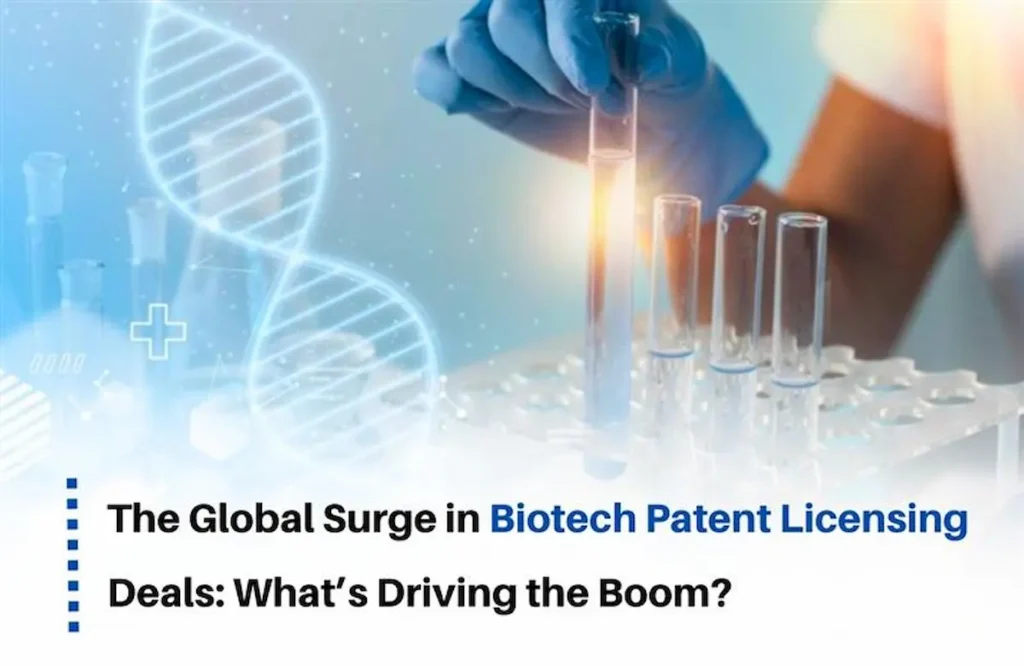
The world of medicine is changing fast and 2026 is a big year for the pharmaceutical sector. Now, global biotech patent licensing is at an all-time high with more deals and more money being spent than ever before. This is happening because of a lot of scientific discoveries, especially in gene editing and cancer treatment, and big companies need to find new medicines to replace old ones. Since intellectual property is what really matters in this business, the fact that many deals are being made shows that people have a lot of faith in the laws that govern innovation around the world.
The Driving Forces Behind the Global Biotech Patent Licensing Record
There are a few reasons why global biotech patent licensing has reached a record high this year. One of the reasons is that some really popular medicines are about to lose their patents, which means that big pharmaceutical companies need to find new medicines to sell. To do this they are buying patents from companies, which is called patent licensing. By doing this they can reduce the risks of spending a lot of money on research and development. Make sure they have a steady stream of new medicines to sell.
Also new technologies like antibody-drug conjugates and bispecific antibodies are becoming really popular. Companies are willing to spend a lot of money to get their hands on them. In the few months of 2026 deals between Chinese biotech companies and other companies reached $60 billion, which is a 73% increase from the year before. This shows just how important it is to have laws for IP Protection so that companies from different countries can work together and invest in each other.
Read Also: HPE Joins Sisvel Wi-Fi Multimode Pool: Strengthening Wi-Fi 7 Patent Strategy
Analyzing the Scale of Global Biotech Patent Licensing Deals
When we look at the deals that are being made in biotech patent licensing, we can see that they are getting bigger and more complicated. The average deal is now worth about $1.3 billion, which is a lot more than it used to be. These deals are not about buying and selling patents but about forming long-term partnerships between companies. For example, big companies like AstraZeneca and GSK are making deals worth billions of dollars that involve not just one medicine, but whole technologies.
These Global biotech patent licensing deals often involve agreements with many different payments and milestones. This means that the company buying the patent might not have to pay much upfront but will have to make bigger payments if the medicine is approved or becomes a commercial success. This helps the company buying the patent to manage its risk while also giving the company selling the patent a long-term incentive to make sure the deal works out. From a perspective, it is really important to get these Patent Licensing agreements just right so that everyone knows who owns what and how much money will be paid and when.
Future Outlook for Innovation and Patent Licensing Strategies
As we look at the rest of the decade, the trend of a lot of patent licensing deals around the world does not seem to be slowing down. The use of intelligence in finding new medicines is expected to speed up the creation of patents, leading to more licensing deals. Legal professionals and industry executives need to adapt to this moving environment by making sure their patent licensing processes are flexible and can handle changes in the global market. The record number of deals in 2026 shows that the global biotech industry is growing up. By focusing on property rights and creating a transparent environment for biotech patent licensing, the industry is doing a good job of turning lab discoveries into patient care.
This record high is not about money; it shows that the world is committed to advancing medical science through protected innovation in biotech.
Recent Post
-
 188 Patents, One Licensing Strategy: How Patent Portfolios Are Being Built for Commercialization?
 -
 AWS’s $1 Billion + IP Licensing Deal: Why Companies License Technology Instead of Building Everything In-House
 -
 Huawei Signs Multi-Year Patent License Deal with Qualcomm Covering AI & 5G, Expected to Push Licensing Value Past $6.9 Billion
 -
 Hassle-Free Closures: How Patent Monetize Manages Everything from Listing to Legal Closure
 -
 Types of Patent Licensing: Exclusive, Non-Exclusive, and Sole Licenses Explained