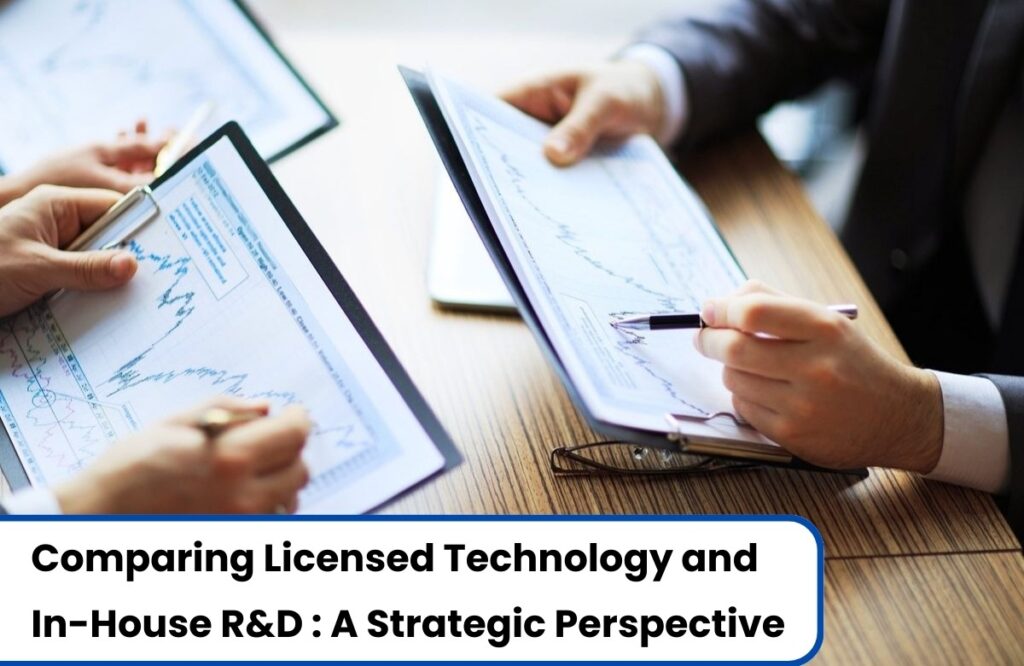
In the realm of intellectual property management, the dichotomy of licensed technology vs in-house R&D serves as the primary pivot for corporate growth. This determination dictates how an entity navigates the complexities of proprietary rights, the avoidance of Trademark and Patent litigation, and the optimization of technical resources. Deciding whether to fabricate new solutions or acquire rights to existing ones requires a forensic analysis of a firm’s legal and financial appetite.
The Proprietary Nature of Internal Research
The path of internal innovation focuses on the generation of novel, non-obvious inventions within a controlled corporate environment. Unlike external procurement, this method yields direct ownership of the underlying intellectual assets.
- Grant of Exclusionary Rights: Successful R&D culminates in the filing of patent application, which, upon issuance, grants the company the legal authority to prohibit unauthorized market participation by competitors.
- Vertical Integration of Assets: Holding the full deed to a patent enables comprehensive patent monetization. The owner can choose to sell the asset, use it as collateral, or generate revenue through outbound licensing.
- Reduction of Dependency: Developing technology internally eliminates the risk of “licensor holdup,” where a third-party owner might impose predatory terms during renewal cycles.
While internal development fosters unique market positioning, it demands a rigorous “Freedom to Operate” clearance. Failure to conduct these searches can lead to inadvertent infringement, resulting in high-stakes IP litigation.
The Architecture of a Technology Licensing Strategy
When comparing patent licensing vs internal R&D, the latter often suffers from “innovation lag.” Licensing functions as a contractual bypass, allowing a firm to utilize established technical claims through a permission-based framework.
- Contractual Immunity: A license essentially serves as a promise from the patent holder not to pursue legal action against the licensee for specific uses of the invention.
- Financial Flexibility: Under a technology licensing strategy, companies can substitute massive upfront research budgets with performance-based royalty structures, preserving liquid capital for marketing or operations.
- Standard Essential Access: In many hardware sectors, certain protocols are protected by patents. Licensing is the mandatory legal gateway to ensure a product meets industry standards without violating the owner’s rights.
Comparative Analysis: Licensed Technology vs In-House R&D
The legal tension between internal R&D centers and patent licensing on the trade-off between speed and sovereignty. Internal development is a slow, equity-building process that yields total control. Internal development is a slow, equity-building process that yields total control. Conversely, licensing is an immediate, utility-based arrangement that grants usage rights without the benefits of long-term ownership.
Furthermore, the risk profiles vary. An organization focused on internal R&D must actively police the market to prevent dilution of its claims. Companies using licensed technology instead of in-house R&D rely on the licensor to preserve patent validity and address any legal challenges.
Read Also: The Need for Structured Patent Monetization Strategies in Conventional Intellectual Property Systems
Strategic Selection Criteria
- Speed to Commercialization: Licensing offers an immediate legal “green light” for production.
- Monetization Capability: Only internal R&D permits a firm to transition from a user of technology to a licensor, facilitating a patent monetization business model.
- Risk Shielding: Robust licensing contracts often shift the burden of IP litigation defense to the original patent holder through specific indemnity provisions.
Conclusion
A high-level technology licensing strategy is rarely used in isolation. The Top leading firms view licensed technology and in-house R&D as complementary strategies for business growth rather than a zero-sum choice. They insulate their core competitive advantages with internally generated patents while licensing non-critical peripheral technologies to ensure rapid scalability. This methodology ensures the corporation remains legally resilient while maximizing its technological footprint.
Recent Post
-
 Hassle-Free Closures: How Patent Monetize Manages Everything from Listing to Legal Closure
 -
 Types of Patent Licensing: Exclusive, Non-Exclusive, and Sole Licenses Explained
 -
 How Patent Monetize Helps International Tech Owners Capture Massive Consumer Bases
 -
 Fighting SEP Abuse: Why Lenovo Partnered with Save Our Standards Coalition in 2026
 -
 Asus and Nokia End Video Coding Litigation with Global Patent Licensing Deal