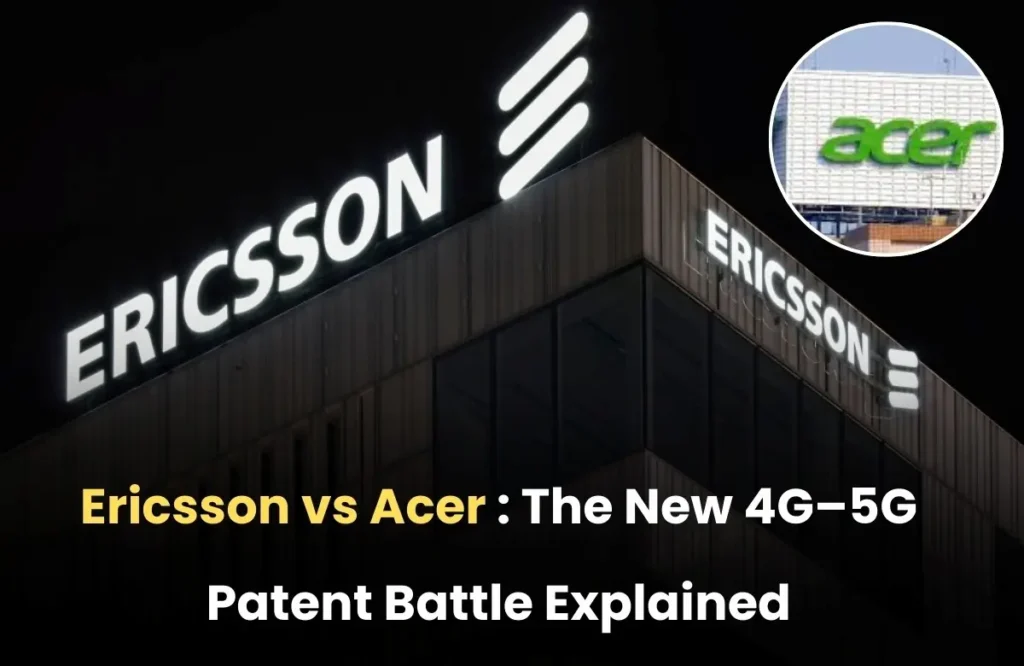
The global telecommunications landscape is built upon a foundation of shared innovation and legal frameworks. When these frameworks encounter friction, the result is often high-stakes IP litigation between industry giants. A primary example of this has emerged with the Ericsson vs Acer Patent Licensing Dispute, where the Swedish networking and telecommunications company, Ericsson, has initiated legal proceedings against the Taiwanese computer manufacturer, Acer. The lawsuit centers on allegations of unauthorized use of proprietary technology, specifically within the realm of cellular connectivity.
The Core of the Ericsson vs Acer Patent Licensing Dispute
At the heart of this legal action is the claim that Acer has integrated Ericsson’s protected technologies into its products without securing the necessary permissions. Ericsson, a major contributor to global wireless standards, holds a vast portfolio of Standard Essential Patents (SEPs). These patents are fundamental to the operation of modern mobile devices.
The Ericsson vs Acer Patent Licensing Dispute highlights the ongoing challenges that companies face when balancing technical innovation with intellectual property rights. According to the filings, Ericsson alleges that Acer has been using its technology in laptops and other cellular-enabled devices for several years without paying the appropriate royalties. This move by Ericsson is seen as an effort to ensure that all market participants adhere to the established norms of Patent Licensing to maintain a fair competitive environment.
Understanding the 4G and 5G Patent Dispute
The technical scope of this conflict is broad, covering multiple generations of mobile communication. This 4G and 5G Patent Dispute is particularly significant because it involves the very protocols that allow devices to connect to high-speed internet, make voice calls, and transmit data across global networks. Ericsson argues that it has invested billions of dollars into the research and development of these technologies and is therefore entitled to fair compensation.
In the world of wireless standards, SEPs must be licensed under FRAND (Fair, Reasonable, and Non-Discriminatory) terms. Ericsson claims it offered such terms to Acer, but negotiations failed to result in a signed agreement. Acer, on the other hand, must navigate the complexities of hardware manufacturing while ensuring that its Patent Protection strategies are robust enough to withstand such legal challenges. The 4G and 5G Patent Dispute serves as a reminder that, as technology evolves, the legal scrutiny surrounding its implementation only intensifies.
Read Also: Revenue Creation from Patents: A Portfolio-Based Monetization Strategy
The Role of Patent Acquisition and Licensing
For many technology firms, Patent Acquisition is a strategic necessity. By acquiring or developing key patents, a company gains leverage in the market and protects its research investments. However, owning the patents is only half the battle. The actual process of Patent Licensing is what allows these technologies to be disseminated throughout the industry.
When a company like Acer incorporates 4G or 5G modules into its hardware, it must ensure that every layer of that technology is legally accounted for. If a manufacturer bypasses the licensing stage, it opens itself up to infringement lawsuits. Ericsson’s decision to sue suggests that it views litigation as a last resort to enforce its rights. The company has historically been very active in seeking Patent Protection across various jurisdictions to safeguard its revenue streams and intellectual property.
Legal Implications and Industry Impact
The outcome of the Ericsson vs Acer Patent Licensing Dispute could set a precedent for how SEP holders interact with implementers in the computing industry. If the court finds in favor of Ericsson, Acer may be forced to pay significant back royalties and agree to a long-term licensing fee structure. Conversely, if Acer successfully defends its position, it could influence how FRAND rates are calculated for computer manufacturers compared to smartphone makers.
The industry closely watches these cases because they dictate the “cost of doing business” in the tech sector. Effective Patent Licensing ensures that innovators are rewarded, which in turn fuels the next wave of technological breakthroughs. Without these legal guardrails, the incentive to invest in massive R&D projects for 6G and beyond could diminish.
Conclusion
The lawsuit filed by Ericsson against Acer is a complex intersection of law, business, and engineering. While the Ericsson vs Acer Patent Licensing Dispute may seem like a dry legal battle, it ultimately affects the consumer market by determining how much manufacturers pay for the technology inside our everyday gadgets. By asserting its rights in this 4G and 5G Patent Dispute, Ericsson is reinforcing the importance of Patent Protection and the necessity of a structured Patent Acquisition and licensing ecosystem. As the case progresses through the legal system, it will undoubtedly provide further clarity on the boundaries of intellectual property in the age of hyper-connectivity.
Recent Post
-
 188 Patents, One Licensing Strategy: How Patent Portfolios Are Being Built for Commercialization?
 -
 AWS’s $1 Billion + IP Licensing Deal: Why Companies License Technology Instead of Building Everything In-House
 -
 Huawei Signs Multi-Year Patent License Deal with Qualcomm Covering AI & 5G, Expected to Push Licensing Value Past $6.9 Billion
 -
 Hassle-Free Closures: How Patent Monetize Manages Everything from Listing to Legal Closure
 -
 Types of Patent Licensing: Exclusive, Non-Exclusive, and Sole Licenses Explained