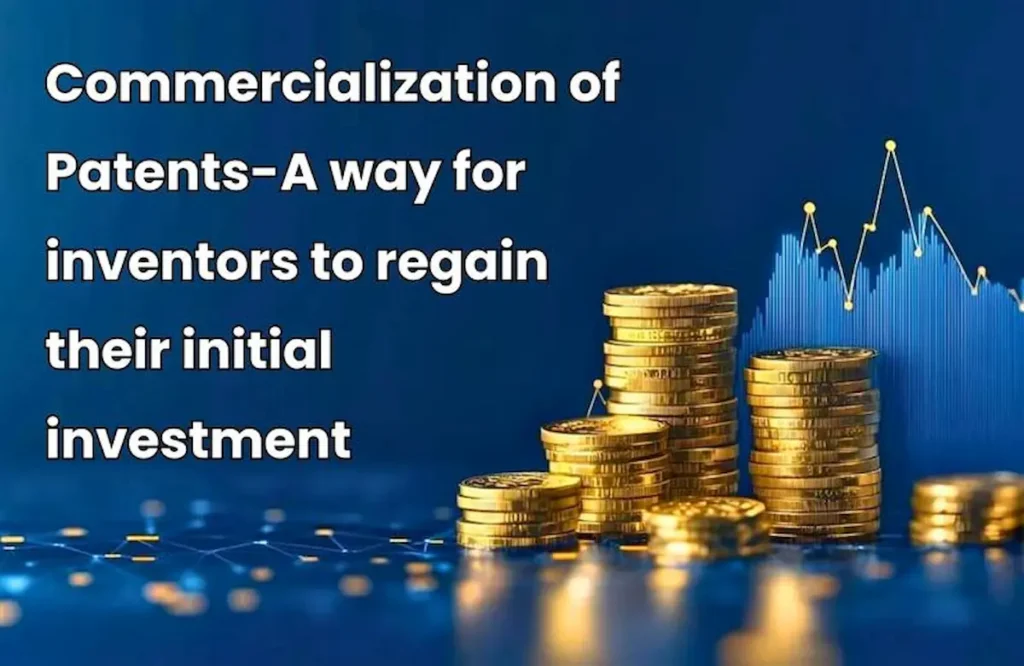
From a creative idea to a patent that is approved, the process is frequently drawn out and costly. Research and development (R&D), prototype testing, legal fees, and filing domestic or foreign applications can cost tens or even hundreds of thousands of dollars for many innovators and small-to-medium businesses (SMEs). A patent is not a profitable asset but rather a sunk expense if there is no strategic plan to sell that intellectual property (IP)or patent commercialization. The crucial process of turning these legal rights into a source of income that enables the patent holder to recover their initial investment and finance future innovation is known as patent commercialization.
Understanding the Financial Realities of the Patent Lifecycle
Getting a patent is just the first step in the financial process. An innovator has probably spent years paying for specialized labor, materials, and IP counsel before they even get a grant letter. Maintenance fees and possible enforcement charges increase the overhead once the patent is granted. These costs keep mounting in the absence of any compensating revenue if the invention lacks a clear route to market.
Inventors must see their patent as a commercial tool rather than only a document of ownership in order to close the gap between expense and profit. When an invention is commercialized, the market validates the financial and intellectual resources that went into it. The inventor moves from a position of deficit to a condition of profitability when a product is successfully brought to market or when technology is made available to others. This shift is essential to preserving the liquidity required to pursue additional technical developments.
Strategic Pathways for Patent Monetization to Ensure Long-Term Financial Sustainability
The more comprehensive approach of deriving value from an intellectual property portfolio is referred to as “patent monetization.” An innovator can choose from a variety of options based on their long-term company objectives, risk tolerance, and available resources. The time frame for recovering initial costs varies depending on the path.
Direct manufacturing is one such technique. In this case, the invention is created and marketed by the creator. This has the largest possible profit margins, but it also necessitates the most initial investment for production, marketing, and distribution. This can make it take longer for many people to get a return on their investment.
Alternatively, a quicker cash injection might be obtained through strategic alliances or the outright sale of the patent. An inventor who might not want to manage a business can get a lump sum payout by selling their patent, commonly known as assignment. In order to enable the inventor to leave the project with their initial expenditures paid and a surplus for their next endeavor, this payment is frequently determined based on the anticipated future value of the technology.
The Economic Benefits of Patent Licensing as a Low-Risk Revenue Stream
Patent licensing is the most effective approach for many independent inventors and research institutes to recover their initial investments without having to deal with the challenges of managing a large-scale manufacturing operation. In exchange for specified fees, licensing enables the patent holder (the licensor) to permit another party (the licensee) to use, produce, or market the patented technology.
Two kinds of financial returns are usually associated with licensing:
Upfront Payments: A lot of license contracts have an upfront signing fee that can be used to pay for previous filing and legal expenses right away.
Ongoing Royalties: These provide a steady flow of revenue for the duration of the patent and are often calculated as a percentage of net sales.
The inventor’s financial risk is much reduced since the licensee bears responsibility for production, quality assurance, and distribution. Because of this, licensing is a favored approach for people who want to swiftly recover expenses while keeping control of the underlying asset. Additionally, licensing makes it possible for a technology to be employed concurrently in several businesses or geographical areas, increasing the potential earnings beyond what a single inventor could do on their own.
Read Also: Why 2026 is the Year to Liquidate Your Idle Intellectual Property Through Global Patent Monetization
Overcoming Common Barriers to Successful Patent Commercialization Efforts
Many patents remain dormant despite the obvious financial advantages because inventors are unable to close the gap between the laboratory and the commercial market. If common issues are not resolved early on, they frequently make it impossible to return the initial investment.
The lack of market fit is one of the main obstacles. Even when an invention is technically sound, there may not be an obvious market for it at the current price. Inadequate networking can also impede advancement. It takes industry relationships and a polished presentation that emphasizes the technology’s business worth rather than merely its technical details to find the right corporate partners.
Evaluating the Cost-Benefit Ratio of Intellectual Property Protection
Inventors should see patents as financial assets rather than awards in order to optimize the return on their original investments. It is frequently more practical to let those rights expire if maintenance fees in a particular area exceed anticipated revenue. Professional patent commercialization also offers defensive value by keeping competitors out of the market. This guarantees “freedom to operate” and protects future profit margins, guaranteeing the investment’s viability even prior to the product’s formal introduction.
Conclusion: Turning Innovation into a Profitable Business Asset
Patent commercialization is the essential final step in the invention cycle. Inventors turn legal rights into financial viability through direct sales, effective patent monetization, and Patent Licensing. This market-driven strategy enables innovative discoveries to support future efforts. Finally, successfully managing these challenges assures R&D expense recovery and provides the capital required for growth, distinguishing professional innovators from individuals in a competitive global economy.
Recent Post
-
 Hassle-Free Closures: How Patent Monetize Manages Everything from Listing to Legal Closure
 -
 Types of Patent Licensing: Exclusive, Non-Exclusive, and Sole Licenses Explained
 -
 How Patent Monetize Helps International Tech Owners Capture Massive Consumer Bases
 -
 Fighting SEP Abuse: Why Lenovo Partnered with Save Our Standards Coalition in 2026
 -
 Asus and Nokia End Video Coding Litigation with Global Patent Licensing Deal